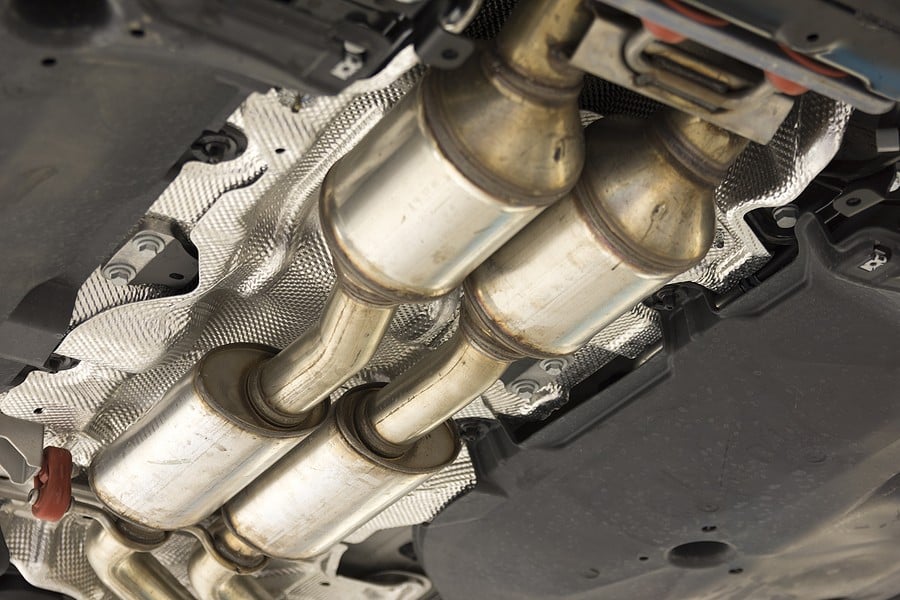
How Often Should You Replace Your Catalytic Converter

While it doesn’t happen that often, your catalytic converter does occasionally need replacement. Converters that have not been damaged by polluted exhaust or other issues related to the car’s care and upkeep typically last about 10 years. After that time, they need to be replaced because they lose efficiency quickly. In states with performance requirements, this can be an issue.

Your converter can be damaged by outside forces like collisions with other vehicles or by engine and exhaust issues that cause compounds the converter is not designed to break down to become lodged in it, clogging it before its lifespan is up.

Convertor Becomes Clogged

The converter usually becomes clogged because something is not working correctly in the rest of the engine. This can happen because of contaminants in the fuel from burning oil or other engine fluids, as well as from adulterants in the fuel. Either way, the buildup of compounds the converter cannot break down safely causes the inside to clog, which keeps the exhaust from flowing freely through it and prevents the proper function of your converter.

So, what does a catalytic converter do? It breaks down harmful exhaust fumes into compounds found in the atmosphere naturally like carbon dioxide and carbon monoxide. These compounds can be dangerous to people in high concentrations, but they are also present in our everyday environment, and they are harmless in natural concentrations. When it is clogged, toxic fumes that can contribute to air pollution wind up being released into the atmosphere, often in violation of vehicle emissions laws.

Physical Damages

Physical damage is also a common cause of malfunction, and it can happen from collisions you do not even know you’ve had. Since the converter is part of the exhaust system, it is typically located on the underside of the car with the muffler and exhaust pipes. Like those components, it can easily be damaged by debris like rocks if you are traveling over rough terrain. It is also frequently damaged in accidents that are large enough to cause repairs to the exhaust system.

Catalytic Converter Theft

Since converters use semi-rare materials in their construction and design, they are sometimes targeted for theft. It is possible to remove the converter from many vehicles without disabling the vehicle or causing immediate suspicion when the car starts. If you notice a change in your exhaust smell or it becomes visible when the car is running, you should check to be sure you still have a functioning converter even if you have no reason to believe there was a mechanical failure.

Replacement Converters

You can find OEM catalytic converter replacements at great prices from the same store you already trust for your other auto parts orders. If you want, you can even upgrade to an aftermarket converter for better efficiency or higher durability, which can help when it comes to resisting damage from debris on the road. Keep that in mind when deciding on the best choice of converter for your current needs.
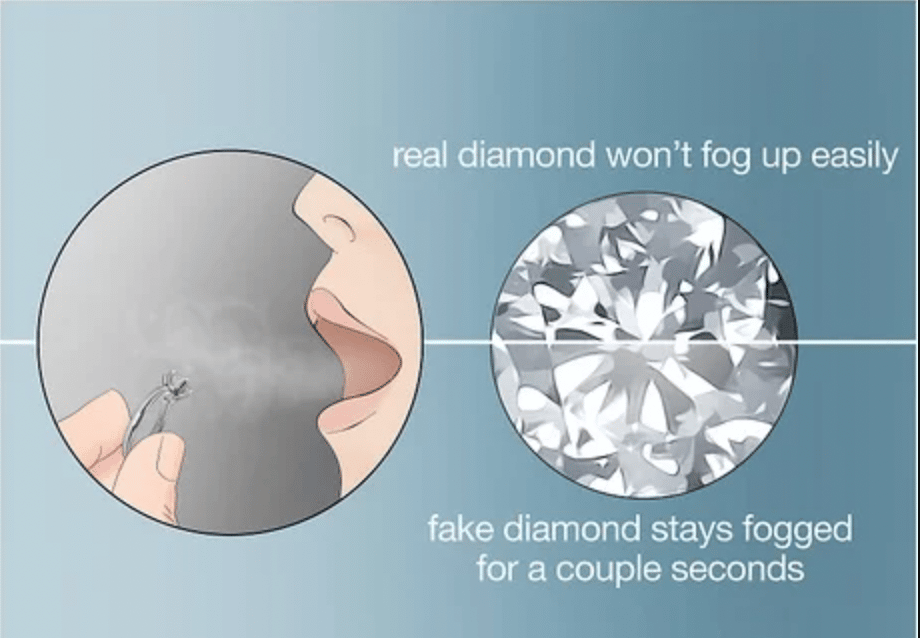
8 Tips on How to Tell if Diamonds Are Real

If you’ve ever tried to buy a diamond, then you know how confusing it can be. There are so many different terms and grades that it’s easy to get confused. Plus, there’s the fact that some of these terms aren’t even regulated by law or even internationally accepted.

How can you tell if diamonds are real or fake? You might think it’s easy to spot the difference between a real diamond and a fake, but many fakes are so convincing that it can be difficult to tell them apart. However, there are ways to distinguish between a real and a fake diamond. Here are tips on how to tell if diamonds are real.

  1. Look for Inclusions

The best way to determine whether or not a diamond is fake is by looking for inclusions. Inclusions are imperfections in the diamond that make it less valuable. If you look closely with a loupe, you’ll see that these imperfections look like small lines or dots on the stone’s surface. They’re caused by impurities trapped inside the crystal during its formation – usually tiny bits of metal or other minerals from the earth’s crust.

You can also find inclusions by placing a drop of water on your finger and then touching it gently onto the surface of your stone. If there are any inclusions, they’ll appear as small white spots when viewed under magnification.

  1. Look at the Diamond’s Under Color

When a diamond has no color, it will have an under color that appears when you look at it through a loupe or microscope. Diamonds with no color have an under color that looks like a dark gray or black band across the bottom of the diamond. This band is referred to as “the mantle.” If you don’t see this mantle, then there’s a good chance that your stone isn’t real.

  1. Check for Weight Imbalance

If you’re buying a loose diamond from someone other than a jeweler, check its weight balance by placing it on top of another stone and looking for any signs of imbalance (i.e., one side sags more than the other). If your diamond is off-balance, it may be fake because real diamonds usually have minimal variation in weight between different sizes or shapes of stones.

  1. Look at the Clarity

Real diamonds have flaws in them, which is why they have clarity ratings. The more flaws a diamond has, the lower its clarity rating. Diamonds with a higher clarity rating look whiter, but even extremely white ones can still have some tiny imperfections visible under magnification. If you hold your diamond up to a light source, look for any large and small flaws inside it and around its edges.

  1. Use a Loupe or Microscope to Examine the Diamond’s Cut

A fake diamond may look good from far away, but up close, it will have imperfections that can’t be seen with the naked eye. For example, a fake diamond might have rough edges or facets that don’t match up perfectly. If you’re unsure about using a loupe or microscope, consult your local jeweler for help.

  1. Use an Ultraviolet Light to Spot Synthetic Diamonds

Some synthetic diamonds fluoresce under UV light because they contain boron atoms that react with ultraviolet radiation and emit visible light at specific wavelengths (usually blue). This effect is called “luminescence.” If you suspect that your diamond is synthetic but want to confirm it before selling it off as real (or buying one as an investment), shine an ultraviolet light on it and look for any fluorescence around its surface area.

  1. Look at the Diamond’s Cut

As one of the most important factors for a diamond’s beauty and value, cut is usually the first thing that people look at when examining a diamond. The cut of a diamond refers to its proportions, symmetry, and polish. A well-cut diamond has precise proportions that allow it to reflect light to make it sparkle more brightly than other types of stone. It also has very few inclusions (the technical term for small imperfections in a stone) which can be seen as lines or dots on the surface of the diamond if you look closely enough.

  1. Check for Fluorescence

Fluorescence is when a gemstone emits light under short-wave ultraviolet light. When diamonds are exposed to this kind of light, they will glow with a blue, green, or yellow color. If your diamond doesn’t fluoresce, it may be synthetic or treated with an oil that makes it look like it has been treated. The only way to tell for sure is by having your diamond tested at an accredited gem lab.

Final Word

Diamonds are the most expensive gemstones on the market today. They are also extremely popular and are used in many different jewelry designs. If you have ever wondered how to tell if your diamond is real, this article will help you out. We’ve discussed some tips on how to tell if diamonds are real or fake.

Why does Baccarat have the Best Odds?

Baccarat is a game of chance that has been around since the early 1800s. It’s one step closer to being included in every casino, as it consistently ranks among some of their most popular games worldwide. The game of Baccarat has been around for centuries and was once associated with high-stakes gambling. But today, thanks to some popular casinos that offer this simple table bet on even terms for all players no matter how large or small their bankroll maybe – anyone can enjoy a few hands of strategy as they strive toward winning those elusive tokens.

Baccarat Odds

The game of Baccarat สมัครสล็อต has a low house edge, making it one the most popular games at casinos. In fact, if you’re looking to play an honest and straightforward strategy with no hidden fees or surprises then this should be your go-to casino bet!

The three options allow players endless possibilities as they try their luck across all betting markets – from singles on either side up until full houses bonus payouts in just about any combination imaginable including even four Hitters who have come together perfectly timed so that every outcome can result only once throughout each match’s duration.

Game’s Regulations

The game’s regulations have been created with the goal of establishing a small house edge on player and banker bets and a greater edge on tie bets. The house edge on a Banker bet is 1.06 percent, whereas a Player bet has a house edge of 1.36 percent. The house margin on tie bets rises to 14.4 percent, although the payoff is higher than the payout on player and banker wagers. When it comes to gambling, Baccarat is the game with a lowest house edge. The rules have been simplified so that even complete beginners can play and enjoy themselves at casinos across America.

Game Depend on Odd:

The odds are not in your favor to win the game of Baccarat. However, you can still have a chance at winning if there’s no tie and even odds. There’s a 44.62% chance of winning and 45.85% for losing in Baccarat, but 953 means that there can be ties.

House Edge of a Game

It’s important to know the house edge of a game before playing. In Baccarat, if you do not include tie chances in your calculations then 51% win odds always apply because it has such low margins for players who are looking at only winning money instead of having fun with games that offer an experience like gambling but don’t actually cause any physical harm (because people can get upset over losing). However, this isn’t all bad news: 5% commissions paid by both high rollers and mass-market alike means there will still come some time where someone wins big while everyone else gets their fair share too. The answer to whether you should play banker or player lies in what type of game it is. If the stakes are high, then go with a bet on either side; but if they aren’t as important and there’s potential for profit from both sides–tie bets are sometimes available-it might make more sense not to take anything away from either party by betting “tie.”

The Formula for Calculation:

The banker odds can be estimated using the formula below.

Assume you’re wagering 100 credits, ignoring the fact that you owe a 5% commission on your winning bets. As a result, you win 0.95 credits for every credit wagered. As previously indicated, the banker is projected to win 50.68 percent of all bets, therefore multiply 50.68 by 0.95 to get 48.15. The player is anticipated to lose 49.32 percent of all bets, therefore subtracting 48.15 from 49.32 results in a difference of 1.17, which is the house advantage for banker bets.

Final Words

In other words, winning a tie bet leaves you with 9, and the house advantage is calculated by dividing 1.47 (the difference between 10.47 and 9) by 10.47. Despite the fact that the house has a significant edge of 14.4 percent, some players are nevertheless prepared to place a tie wager due to the significantly greater payout. However, regardless of the 5% charge, the player and banker bets are far more advantageous.