
Top Online Casino Secrets That Casinos Might Not Want You To Be Aware Off

Top Online Casino Secrets That Casinos Might Not Want You To Be Aware Off

Due to the fierce rivalry in the online casino sector, Internet casinos seek to deliver greater gaming products and services while also attracting gamers to visit, play and check it. While some people are willing to take risks for the purpose of amusement, when playing casino games of skill and chance from the comfort of their own homes, individuals should exercise prudence and act responsibly.

We’ve decided to reveal the top secrets that online casinos don’t want you to be aware of before you start playing.

1. Expected value, probability, house edge, and standard deviation

Casino enthusiasts enjoy playing their favorite casino games. However, not all games have the same odds, chances, or house edge. Understanding how these terminologies work is essential for understanding all parts of gaming that casinos do not want players to be aware of.

As a result, players must carefully consider which game to play and assess the benefits and drawbacks of each variant. Furthermore, while some casino games have set odds, others allow players to decrease the house edge to a bare minimum with excellent gaming abilities and strategies.

2. Reduced House Advantage Games

Casinos do not want their customers to play games with a lower house edge since these games provide the players an advantage. As previously stated, certain skill-based games like Blackjack, Craps, and Video Poker have a lower house edge than other casino games like slots.

Furthermore, certain bets or variations of these games may have extremely low house edges. For example, the house edge in Blackjack Single Deck is 0.46 percent. The difference lies in the number of cards, which is 52.

3. Looking for Extras

Online casinos do not want players who are just interested in bonus offers and make deposits as a result of an enticing bonus offer. In other words, they do not want gamers to play games solely for the sake of collecting bonuses. These players calculate the wagering requirement for a bonus as well as the expected value, or the amount of money they would win or lose on average on their bets to meet the wagering requirement.

4. Jackpot Recipients and Counters

When playing online casino games, psychological variables are also taken into account. Casinos routinely market jackpot winnings in order to entice you to visit, join, check it and play the games. In order to attract you to join the Winners Hall, they want to talk about their life-changing progressive jackpot winners and the amount of money they have given to lucky players. Furthermore, some casinos have a section dedicated to prize winners reliving remarkable incidents.

5. Online casinos do not want you to stop winning

Online casinos do not want players who are on a winning streak to abandon their games. This is due to the fact that if you stop while you’re ahead, you truly win. Being ahead means you’ve won, and vice versa. However, some casino goers lose their minds, especially when they win. Consider the following example. You begin with a $500 budget.

While playing one or more casino games, you win $1,500. At this point, you are greedy and want more, so resist the urge to quit and continue riding through the heights.

6. Betting Strategies

Online casinos prefer individuals who believe they have a betting plan or approach for beating the house. They will pick you up in a limo and lavishly pamper you if you play at their casino and display your betting method. The reason for this is that casinos, even if they provide high payback percentages and low house edge games, are mathematically designed to profit in the long run.

Conclusion

To conclude I would say, if you join a casino that offers a huge bonus and entices you to join, you may not get what you expect. There is a deeper layer with internet casinos. As a result, we’ve decided to reveal the top secrets above that online casinos don’t want you to be aware of before you start playing.
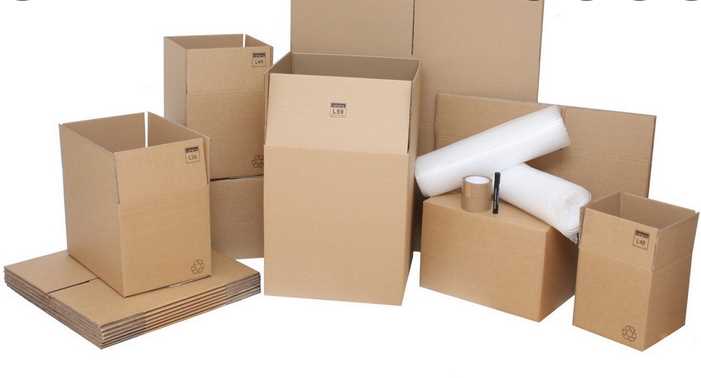
How to Select the Appropriate Packaging for Your Product

How to Select the Appropriate Packaging for Your Product

When it comes to selecting the suitable material to package your product, paying attention to details is essential. After all, the packaging you select for your product might be one of the most essential aspects in determining its success.

The ideal packaging will entice customers and keep your product fresh and secure during shipping. When prospective buyers know they can rely on a fresh product from the time it hits the shelf to the time it’s in their hands, it confirms the quality of the brand and product. This also implies that choosing the wrong packaging might be damaging.

All of the factors below must be taken into account in order to create the perfect packaging possible for your product.

1. Budget

Before you embark on any packaging design project, you must first consider your budget’s scope. This will dictate what resources you may use and how much money you can spend on making your design as appealing as possible. Materials like natural fibers and glass are elegant and aesthetically enticing to customers. Still, they are costly to manufacture and ship. Glass is heavy and fragile, posing transportation and storage problems as well as the possibility of higher product costs for consumers.

There are numerous low-cost solutions such as food-grade cardboard, a low-cost material that provides enough crush protection and unique design possibilities. Plastic is not the most ecologically friendly option, but it is recyclable or constructed from recycled resources. Including such information on the package can help customers feel good about purchasing your products.

The success of your packaging project will be heavily influenced by the balance you strike between what you want to spend on design and production against what you’ll need to spend on supplies.

2. Sustainability and Choice of Materials

When it comes to deciding your product packaging materials, a good rule of thumb is to treat your product the same way you would treat yourself. Just as you wouldn’t want to live in an overly big or undersized home, having proper space for the correct package significantly impacts the finished product.

Like many other flexible films, shrink films are lightweight and often produce great printing solutions. In comparison to bulkier, heavier alternatives, the freight and delivery costs are also quite favorable for enterprises. There are other film choices available for your brand to promote sustainability.

Flexible films are ideal for protecting and extending product shelf life and providing appealing packaging on and off the shelf for foods, beverages, cosmetics, healthcare, hardware, and retail products.

When it comes to eCommerce packages, consumers value convenience. Today, there are many great flexible options available that can protect your product during transportation and are easy to open, handle, use, and dispose of. Determine which materials function well and select those that are most suited to your product.

3. Transportation

No matter how beautiful the design, if the product does not perform effectively, it will not benefit you. A great design that convinces consumers it was intended for them but can’t travel from your location to the stores without being ruined is useless. If your product is heavy, fragile, or has an odd shape, you should consider using materials that are developed for sturdiness. Products with a long shelf life that must stand out even after a long period of time on the shelf require particular considerations as well.

Paying for sufficient protective package design in the first place is always more cost-effective in the long run than replacing defective products later on. Strive for the happy medium where the cost of product damage matches the cost of protective packaging, and you’ll be in excellent condition to accommodate both your production budget and your consumers.

4. Size

If your product comes in four different sizes, you might be able to save money by making two different sized packaging instead of four unique sizes by getting creative with the measurements and design. Being innovative in this way, as well as adopting cost-cutting methods like this, may help to maintain the integrity of the product you deliver. As an extra benefit, you will save time and money while also ensuring uniformity throughout your offerings.

Furthermore, it would help if you optimized your pouch sizes to match the amount of product that needs to go into the packaging. Using the correct size pouch allows you to enjoy more savings and be sure there isn’t unnecessary extra headroom inside the pouch. Having extra air inside the package doesn’t benefit your product with regard to preservation and visual appeal.

5. Branding and Design

While it’s critical to think about cost, shipping, materials, and package design and to include each of these components into your overall package design, it’s also critical to keep your target audience in mind. Placing your target audience front and center throughout the design process can help you achieve overall package design success.

The material you employ in your package design is an extension of your brand. Therefore any gap between your materials or design and your brand’s statement can confuse customers and cause them to lose their confidence in you. To connect to your customers, you must conduct sufficient research and understanding of them before making these important marketing and branding choices.

Market research is an excellent approach to understanding what your target audience wants and how to match those values with your finances, transit, and sustainability demands and goals. Always pay close attention to your target and respond to their individual demands.

The Possibilities Are Limitless

There’s an infinite selection of materials to pick from, and the only constraints are cost, sustainability, and sometimes your creativity. Make sure to go through all of the material possibilities and come up with a realistic design that has your target market in mind. Most significantly, ensure that whatever product you place on the shelf conveys your brand’s message to your target demographic.

You will be well equipped to construct a stunning, sustainable, eye-catching, and high-quality package by considering all of the mentioned factors. This will guarantee that the entire process of selecting the proper materials for your business is smooth and productive. In the end, you’ll be sending out the most visually appealing products for your business.

The Great Cartridge Debate: .308, .30-’06, 6.5 Creedmoor and More

The Great Cartridge Debate

We are, as a whole, to blame, all of us, myself included. We’ll be at a mid year grill, or sharing a lager at the nearby bar, or lounging around the pit fire, and the cartridge discussion will start. Furthermore, when it starts, you will undoubtedly hear a wide range of egotistic cases, stubborn contending focuses, rummage stories of great, faultless execution in the possession of different uncles and grandsires, and a wide range of justifications for why some other cartridge than the metallic legend getting worship at that point is a senseless, inefficient, adolescent plan. Some of the time you’ll hear – conceivably all the while, assuming the group is sufficiently huge and the tongues are free – that old cartridge ought to be persuaded to retire, as their time is finished, or that anybody utilizing a brand new either magnum is a cursed numb-skull and should adhere to the dependable cartridges, similar to the late Mr. this and that did.

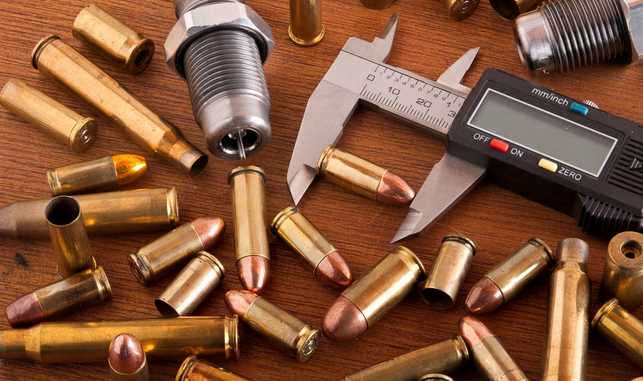
Only a couple of the unique .30 type cartridges, from the little to the tall.

Firearm scholars – present organization included – can be similarly blameworthy. We’re human all things considered, with sentiments like every other 6.5 creedmoor ammo person, however the articles we compose can at times put a slant on how cartridges are seen. The actual organizations have a touch of culpability in this wreck also; you’ll see the most current cartridge promoted as a supernatural occurrence solution for all of our shooting burdens up to that point. Now and then it very well might be an admirable statement, different occasions a curve on numbers or lengths or speeds and such. In any case, that is all immaterial, as are the greater part of the contentions about cartridges and types. In numerous ways, it’s totally been done, and in alternate ways, we can solidly accept the best is on the way. Yet, I really do feel that we beat each other up superfluously. Solid conversation is consistently great – particularly when running after the objective of investigating the ideal cartridge for a specific shooter or circumstance – however it appears to be that the conversations have gone to contentions, for reasons I can’t exactly clarify.

Cross-over and Redundancy

How about we face one basic truth: there is a ton of cartridge cross-over and excess. No, there is a huge load of cartridge repetition, yet entirely that is alright. There’s a lot of space for what we have, yet a few cartridges accompany a proviso: contingent upon the state of mind of the market, ammo might be promptly accessible. Also there’s one more legitimate conversation point: does the accessibility of a cartridge direct its prominence, or does the ubiquity of a cartridge guarantee its accessibility? How about we take a gander at the examination contentions, and their legitimacy or deficiency first, then, at that point, address with the fame/accessibility issue.

Toward the finish of the nineteenth century, cartridges were contracting and contracting quick. Our American hunting rifles were descending in size; the gigantic .45 and .50 type blackpowder cartridges were giving approach to the .30 and .32 type weapons, and afterward again to the .25 type cartridges. In England, the Rigby-planned .450 Nitro Express – delivered in 1898 – genuinely opened the eyes of the Indian and African trackers who had depended on the .500 and .577 types, or the behemoth four and surprisingly two-bore muzzleloaders. Mauser’s 7x57mm cartridge prompted a ton of cartridge advancement on the two sides of the lake, and the subsequent field reports were similarly edifying and befuddling. The initial 25 years of the twentieth century presented to us some awesome cartridges – perhaps the best period of cartridge improvement ever – however there were no principles. Scholars, trackers and guides before long created feelings, and things kind of settled out, for certain great, firm rules with regards to which cartridges were appropriate for a specific circumstance. The shots accessible for these cartridges assumed a clear part in the advancement of a standing, and as the shots went through an improvement stage, as far as possible – genuine or saw – changed alongside them. By 1925, we had the range truly covered. The 7×57 Mauser, the .30-’06 Springfield, the .30-30 Winchester, the .416 Rigby, the 6.5×55 Swedish Mauser, the .375 H&H Belted Magnum, the .450 and .470 Nitro Express, the .250-300 Savage, the .270 Winchester, the .404 Jeffery and the .300 Holland and Holland Magnum; all were accessible to the tracker/shooter by the 1926 hunting season. I’ll request that anybody name the major event hunting circumstance that can’t be covered, and covered well, by one of those cartridges.